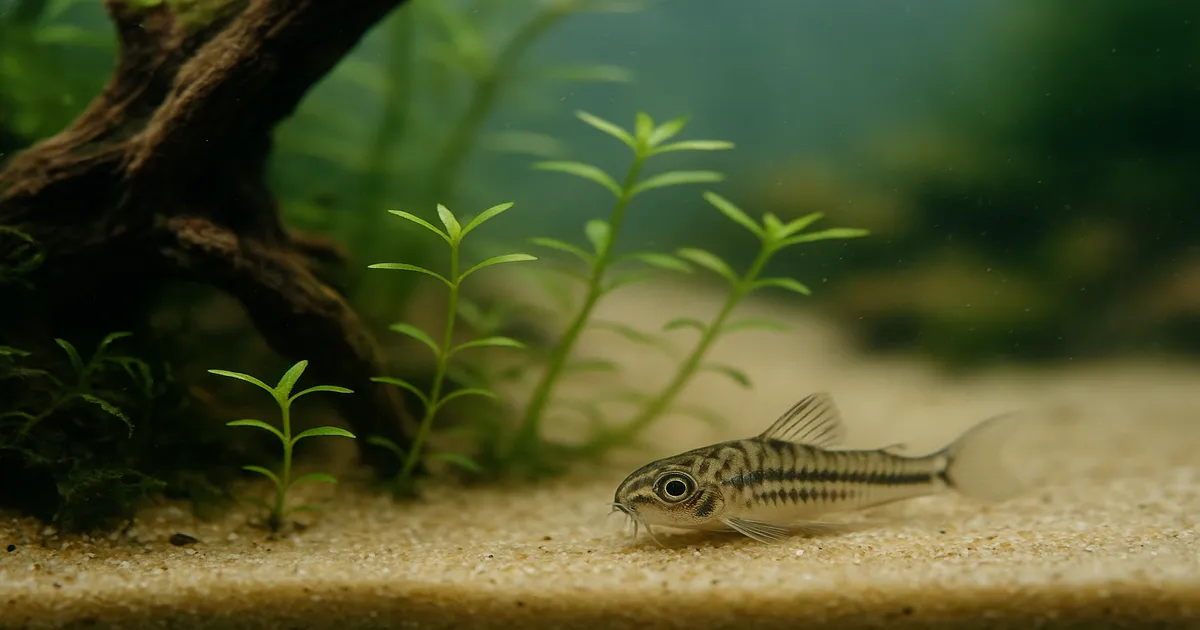
Quick Answer: Most pygmy cory problems trace back to poor water quality, coarse substrate, a school that’s too small, or incompatible tankmates. Identify the root cause first — whether that’s an ammonia spike, sharp gravel damaging barbels, or a bully in the tank — and the fix is usually straightforward. The majority of common issues are completely reversible once you address the husbandry.
If you’re asking “what is wrong with my pygmy cory,” you’re already ahead of most hobbyists. These tiny fish often decline silently before owners notice anything is off. The good news: the five most common problems all have clear causes and proven treatments.
A quick note on species before diving in. The name “pygmy cory” covers three different fish in the hobby — Corydoras pygmaeus (the true pygmy cory), C. hastatus (tail-spot pygmy cory), and C. habrosus (Venezuelan pygmy cory). Their care needs and health problems are nearly identical, so this guide covers all three.
The five most common problems:
- Barbel erosion or barbel loss
- Red blotch disease (hemorrhagic septicemia)
- Ich (white spot disease)
- Columnaris (saddleback disease)
- Fungal infections
Pygmy Cory: Normal Behavior vs. Real Warning Signs
The Three Species Sold as Pygmy Cories
All three species max out between 1.0–1.4 inches, making them among the smallest corydoras in the hobby. Here’s how to tell them apart:
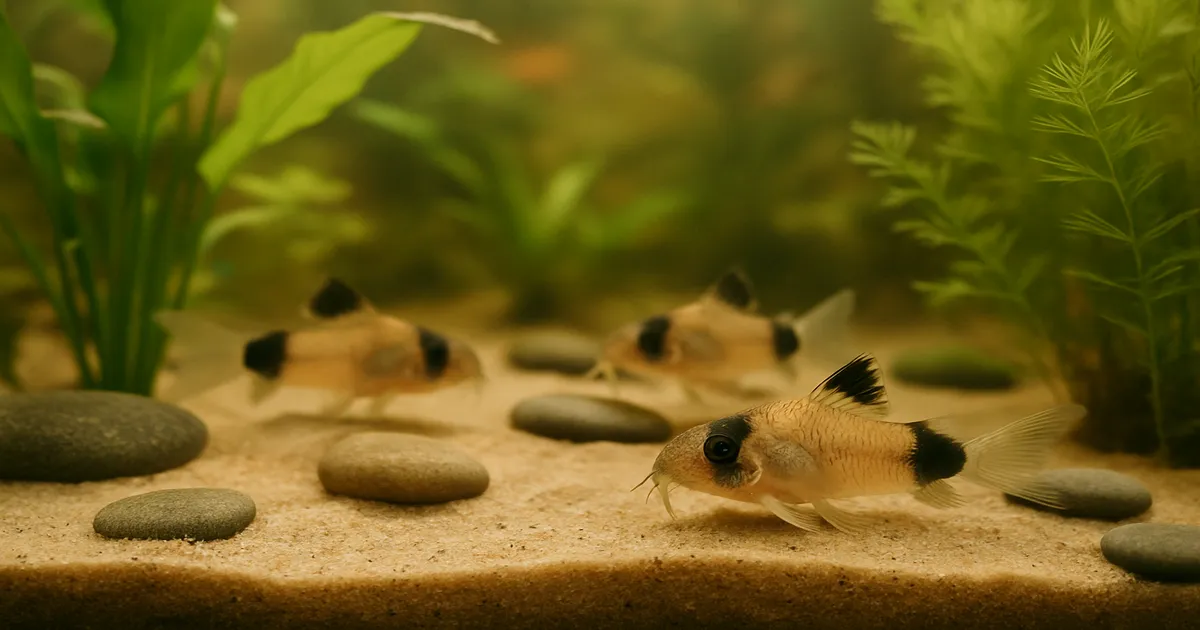
- C. pygmaeus — a thin dark horizontal stripe runs the full length of the body; active midwater schooler
- C. hastatus — similar stripe with a distinctive black spot at the tail base; also a midwater schooler
- C. habrosus — speckled “salt and pepper” pattern; stays closer to the substrate like a traditional cory
The midwater behavior of C. pygmaeus and C. hastatus genuinely surprises new owners who expect all cories to be bottom-dwellers. Hovering and schooling in open water is completely normal — not a sign of distress.
Behaviors That Look Alarming But Are Not
Surface gulping is probably the most misunderstood pygmy cory behavior. These fish have a modified intestine that absorbs atmospheric oxygen directly. They dart to the surface, gulp air, and zip back down. It’s healthy and normal. If all your fish are gasping at the surface simultaneously, that’s a different problem — but a pygmy cory doing it alone is just being a pygmy cory.
Other normal behaviors include rapid darting, resting motionless on plant leaves or the substrate, and brief periods of hiding. These fish are also crepuscular — most active at dawn and dusk. A seemingly inactive fish in the middle of the day isn’t necessarily sick.
Genuine Red Flags
These are the signs that something is actually wrong:
- Clamped fins held tight against the body
- Listing or tilting to one side
- White spots, fuzzy growths, or red streaks on the body
- Refusing food for more than two days
- Hiding alone and not joining the school
- Rapid, labored gill movement
If you’re seeing any of these, keep reading.
Water Quality: The Root Cause of Most Pygmy Cory Problems
Ideal Water Parameters
| Parameter | Safe Range | Optimal Range |
|---|---|---|
| pH | 6.4–7.4 | 6.5–7.0 |
| GH | 2–12 dGH | 2–6 dGH |
| KH | 1–8 dKH | 1–4 dKH |
| Temperature | 72–79°F (22–26°C) | 74–78°F (23–26°C) |
| Ammonia | 0 ppm always | 0 ppm |
| Nitrite | 0 ppm always | 0 ppm |
| Nitrate | below 20 ppm | below 10 ppm |
Test your water before assuming disease. A liquid test kit covers all the critical parameters in about ten minutes and is far more reliable than test strips.
Why Pygmy Cories Are So Sensitive
Their tiny body mass works against them. Toxins like ammonia and nitrite affect a 1-inch fish far faster than a 4-inch fish. An ammonia spike that merely stresses a larger species can kill pygmy cories within hours. Even chronic low-level nitrate above 20 ppm quietly suppresses their immune system over weeks, leaving them vulnerable to every pathogen in the tank.
Chlorine and chloramine from tap water are equally dangerous. Always treat new water with a quality dechlorinator before it touches the tank. (Seachem Prime)
How to Correct Poor Water Quality
- Test ammonia, nitrite, nitrate, and pH before doing anything else
- If ammonia or nitrite is above 0 ppm, do an immediate 30–40% water change
- Confirm your tank has completed the nitrogen cycle before adding fish
- Maintain 25–30% weekly partial water changes as a baseline
- Never change more than 50% at once — sudden parameter swings are as dangerous as bad parameters
Soft, Slightly Acidic Water Matters
Pygmy cories come from soft, blackwater streams in South America. Hard, alkaline tap water causes chronic osmotic stress — not dramatic enough to kill quickly, but enough to keep fish perpetually weakened. If your tap is hard, Indian almond leaves, alder cones, or a piece of driftwood will naturally soften the water and release beneficial tannins. These additions also mimic the leaf litter of their natural habitat and encourage normal foraging behavior.
Tank Setup Mistakes That Make Pygmy Cories Sick
Substrate: The Most Common Setup Error
Pygmy cories constantly sift substrate with their delicate barbels to find food. Coarse gravel or sharp substrate physically abrades those barbels, creating open wounds that quickly become bacterial infections. The result is barbel erosion — one of the most frequently reported pygmy cory problems.
Switch to fine, smooth sand. Pool filter sand is cheap and works well. Pre-rinsed aquarium sand is another easy option. (CaribSea Super Naturals Sunset Gold) Avoid crushed coral entirely — it raises pH and KH, pushing parameters in the wrong direction.
Tank Size and Schooling
A 10-gallon tank is the bare minimum for a school of six, but 15–20 gallons gives you more stable water chemistry and room for the midwater schooling behavior of C. pygmaeus to fully express itself. Small tanks crash faster chemically, and cramped conditions pile stress on top of stress.
Filtration and Flow
Sponge filters are the gold standard for pygmy cory tanks. They provide gentle biological filtration, create minimal current, and the sponge surface becomes colonized with biofilm the cories will graze on. If you use a hang-on-back filter, cover the intake with a pre-filter sponge — an unguarded intake can trap or injure a 1-inch fish.
Strong flow is a problem. These fish come from slow-moving streams, and a powerful current forces them to fight it constantly, burning energy and adding chronic stress.
Plants, Lighting, and Hiding Spots
Keep lighting low to moderate on a consistent 8–10 hour timer. Floating plants like Salvinia or frogbit diffuse harsh light naturally and create the dappled shade pygmy cories prefer. Dense planting with Java moss, Anubias, and Cryptocoryne gives the fish places to retreat and feel secure. A layer of leaf litter completes the picture — it’s functionally and aesthetically close to their natural habitat.
Compatibility Problems That Stress or Harm Pygmy Cories
School Size Is a Health Issue
Keeping fewer than six pygmy cories isn’t just an aesthetic problem — it’s a health problem. Small-group or isolated fish experience chronic stress, and chronic stress suppresses the immune system. Aim for a school of 10–15 if your tank allows it. The behavioral difference between a group of six and a group of twelve is remarkable.
Safe Tankmates
The best companions are small, peaceful fish with similar water requirements:
- Ember tetras, green neon tetras, chili rasboras
- Celestial pearl danios, Endler’s livebearers, dwarf pencilfish
- Otocinclus catfish (nearly identical water needs)
- Neocaridina shrimp, nerite snails, mystery snails
Tankmates to Avoid
- Tiger barbs and serpae tetras — notorious fin nippers
- Bettas — temperament varies, but the risk isn’t worth it in most cases
- Most cichlids — even “dwarf” species can be too aggressive in smaller tanks
- Larger Corydoras species — they’ll outcompete pygmy cories for food at the bottom
Aggression and competition are chronically underestimated causes of disease. A fish that’s being bullied or starved will eventually get sick.
Feeding Problems: Malnutrition and Competition
In a community tank, faster midwater fish almost always win the race to the food. By the time a pellet reaches the bottom, it may already be gone. This is a silent problem — the fish looks fine until malnutrition weakens it enough for disease to take hold.
Best foods for pygmy cories:
- Micro-pellets (0.5–1mm)
- Sinking wafers
- Frozen baby brine shrimp, daphnia, and micro worms
- Repashy gel foods (Community Plus or Soilent Green)
Feeding tips that actually help:
- Turn off filter flow for a few minutes at feeding time so food sinks undisturbed
- Use a turkey baster or pipette to target-feed directly to the substrate
- Try feeding after lights-out — pygmy cories stay active while competitors slow down
- Feed 2–3 small portions daily rather than one large serving
What Is Wrong With My Pygmy Cory? Common Diseases Explained
Barbel Erosion and Barbel Loss
Symptoms: Shortened, stubby, or absent barbels; difficulty locating food.
Causes: Coarse or sharp substrate physically damages the barbels. Bacteria (Aeromonas, Pseudomonas) infect the wounds, and poor water quality accelerates the damage.
Treatment:
- Switch to fine sand immediately
- Do 25–30% water changes every 3–5 days
- For active bacterial infection, treat with Kanaplex (Seachem) following label directions
Barbels can regrow completely if you catch the problem early and fix the substrate.
Red Blotch Disease (Hemorrhagic Septicemia)
Symptoms: Red streaks or blotches on the body, belly, or fins; lethargy; loss of appetite; listing to one side.
Causes: Bacterial infection (Aeromonas hydrophila, Pseudomonas fluorescens), almost always triggered by poor water quality or injury.
Treatment:
- Perform a 30–40% water change immediately
- Move affected fish to a quarantine tank
- Treat with Kanaplex, Furan-2, or a Maracyn/Maracyn 2 combination
Ich (White Spot Disease)
Symptoms: Tiny white spots (roughly 1mm, like grains of salt) on the body, fins, and gills; flashing against decor; rapid gill movement.
Treatment:
- Gradually raise temperature to 82–86°F (28–30°C) over 48 hours — this accelerates the parasite’s life cycle and makes it vulnerable
- Maintain elevated temperature for 10–14 days with strong surface agitation for oxygenation
- If medication is needed, use Ich-X at half the standard dose — pygmy cories are sensitive to full-strength treatments
- Remove activated carbon from the filter during treatment
Columnaris (Saddleback Disease)
Symptoms: White or gray patches on the back, frayed fins, cottony growth around the mouth, ulcers. It progresses fast and is often mistaken for a fungal infection.
Treatment: Quarantine immediately — columnaris is highly contagious. Treat with a Kanaplex + Furan-2 combination and improve water quality aggressively. Do not delay; this disease can kill within days.
Fungal Infections
Symptoms: Fluffy, white, cotton-like growths on the body, fins, or around wounds. These are opportunistic infections — they colonize damaged tissue rather than attacking healthy fish.
Treatment: Use a dedicated aquarium antifungal such as API Pimafix or Seachem Paraguard. Address the underlying wound or water quality issue, or the infection will return.
⚠️ Important: Aquarium salt is commonly recommended as a general fish remedy, but it is harmful to corydoras. Pygmy cories lack the full-body scale armor of most fish, making them far more sensitive to osmotic stress. Never add salt to a tank housing corydoras — even at “low” doses. Use the treatments listed above instead.
Frequently Asked Questions
Why is my pygmy cory sitting at the bottom and not moving?
Occasional resting on the substrate is normal, especially during midday when these crepuscular fish are least active. If your pygmy cory is listless, unresponsive, has clamped fins, or is refusing food, test your water immediately — ammonia or nitrite toxicity is the most likely culprit. Lethargy combined with visible symptoms (spots, redness, fuzzy growths) points to active disease requiring treatment.
Can pygmy cory barbels grow back?
Yes, but only if you address the root cause. Switch to fine sand and improve water quality with regular partial water changes. If there’s an active bacterial infection, treat with Kanaplex. Regrowth is slow — expect several weeks — but it does happen when conditions are corrected early enough.
Why does my pygmy cory keep swimming to the surface?
Almost certainly normal aerial respiration. Pygmy cories have a modified intestine that absorbs oxygen from atmospheric air, and they dart to the surface regularly to do exactly this. If all fish in the tank are gasping at the surface at the same time, check your oxygenation and water quality right away — that’s a different situation entirely.
How do I treat ich without harming my pygmy cories?
Use heat treatment first: raise the temperature gradually to 82–86°F over 48 hours and hold it there for 10–14 days with strong surface agitation. If you add medication, use Ich-X at half the recommended dose. Never use aquarium salt with corydoras.
What is the minimum school size for pygmy cories?
Six is the absolute minimum, but ten or more is strongly recommended. Small schools cause chronic stress and immune suppression. The difference in behavior and health between a group of six and a group of twelve is significant — a larger school produces more confident, active, and visibly healthier fish.