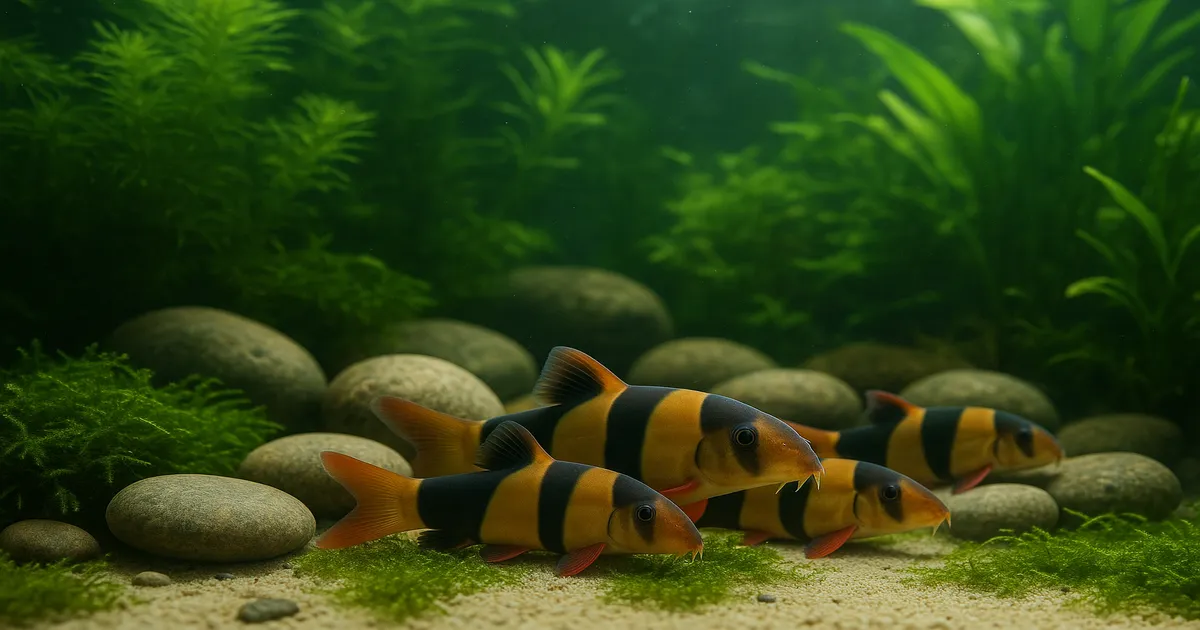
Quick Answer: Clown loaches (Chromobotia macracanthus) are large, long-lived, highly social fish that thrive in groups of 5–6 or more in tanks of at least 75 gallons (125+ gallons for adults). They need warm, soft, slightly acidic water (78–82°F / 25.5–28°C, pH 6.5–7.0), robust filtration, and a varied sinking diet. With a lifespan of 20–25+ years, caring for clown loaches is a serious long-term commitment — but an endlessly rewarding one.
Learning how to care for clown loaches properly means understanding what you’re really signing up for: a fish that can outlive your dog, grow to the size of a dinner plate, and needs a tank big enough to match. Most people buy them as cute 2-inch juveniles without realizing any of this. This guide covers everything you need to keep them healthy for decades.
Clown Loach Species Overview
Scientific Classification and Origin
Clown loaches were first described by Bleeker in 1852 and spent decades classified as Botia macracanthus. In 2004, Maurice Kottelat reclassified the species into its own monotypic genus, giving us the current name Chromobotia macracanthus — “macracanthus” meaning “large spine,” a nod to the sharp subocular spine beneath each eye. They belong to the family Botiidae, order Cypriniformes.
Their native range covers the Indonesian islands of Sumatra and Borneo, where they inhabit river drainages including the Batang Hari and Musi systems. They’re migratory fish, moving into flooded forests during the rainy season to spawn, then returning to main river channels in the dry season.
Physical Characteristics and Size
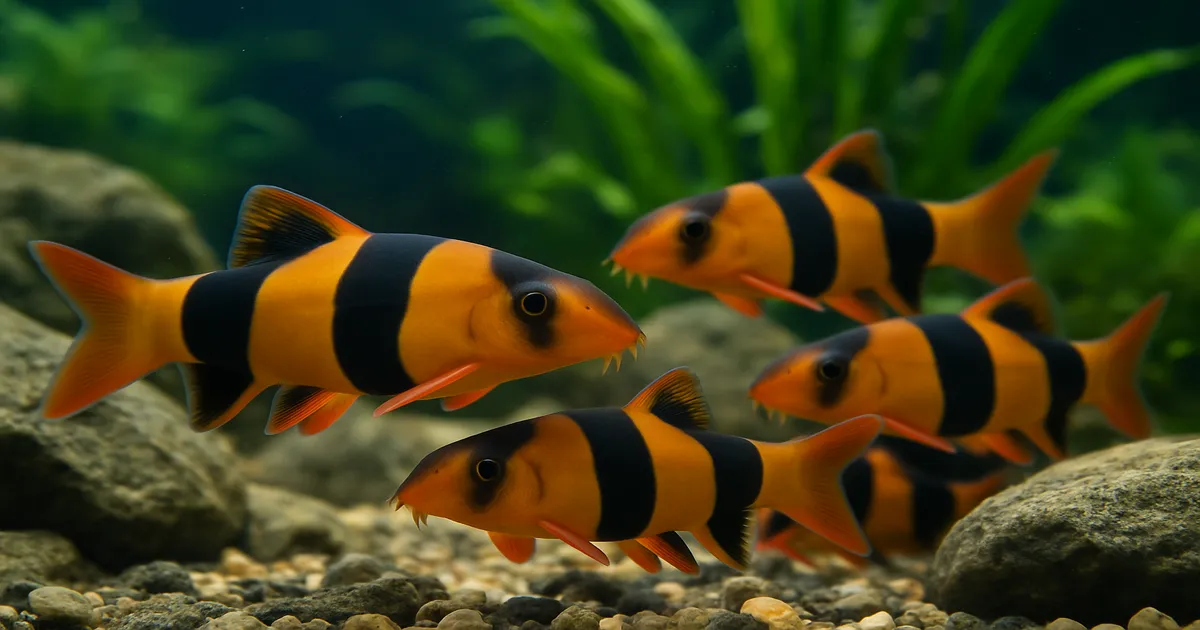
The vivid orange body with three bold black vertical bands makes clown loaches one of the most recognizable fish in the hobby. Wild specimens can reach 12–16 inches (30–40 cm). In aquaria, most top out between 6–12 inches (15–30 cm) depending on tank size and care quality — still a substantial fish by any measure.
One important handling note: that subocular spine is no joke. It causes painful puncture wounds and tangles instantly in mesh nets. Always use smooth plastic containers or specimen bags for transport.
Natural Habitat and Behavior
In the wild, clown loaches live among leaf litter, submerged roots, and rocky crevices in soft, well-oxygenated water. They’re benthic foragers — always nosing around the bottom for snails, worms, and crustaceans.
In the aquarium, they’re full of personality. They produce audible clicking sounds during feeding and social interaction, sleep in piles, and — most alarmingly to new owners — frequently lie on their sides for a nap. This is completely normal behavior, not a sign that something is wrong.
Lifespan and Long-Term Commitment
A well-cared-for clown loach can live 20–25 years, with some individuals reportedly exceeding 30. Before buying a group of juveniles, ask yourself honestly whether you can maintain a 125+ gallon tank for the next two decades. If the answer is yes, few fish are more rewarding.
One more thing worth knowing: the vast majority of clown loaches sold in the hobby are wild-caught. Commercial captive breeding at scale remains rare, which carries real conservation implications.
Ideal Water Parameters for Clown Loaches
Temperature, pH, and Hardness
| Parameter | Acceptable Range | Ideal Range |
|---|---|---|
| Temperature | 75–86°F (24–30°C) | 78–82°F (25.5–28°C) |
| pH | 6.0–7.5 | 6.5–7.0 |
| GH | 5–12 dGH | 5–8 dGH |
| KH | 3–10 dKH | 4–6 dKH |
| Ammonia | 0 ppm | 0 ppm |
| Nitrite | 0 ppm | 0 ppm |
| Nitrate | <40 ppm | <20 ppm |
Slightly acidic water (pH 6.5–7.0) most closely replicates their native Sumatran and Bornean rivers. They can tolerate up to pH 7.5 short-term, but prolonged alkaline conditions increase stress and disease susceptibility. Hard water above 15 dGH should be avoided long-term. Use a reliable liquid test kit to monitor parameters weekly — strips are too imprecise for a species this sensitive.
Why Clown Loaches Are Extra Sensitive to Water Quality
Clown loaches lack the full protective scale covering of most fish. Their skin is far more permeable to dissolved pollutants, which means ammonia spikes, medication overdoses, and even minor parameter swings hit them harder and faster than they would a scaled species. This is the single most important thing to internalize about their care.
Zero tolerance for ammonia and nitrite — full stop. Nitrate should stay below 20 ppm ideally, and certainly under 40 ppm. Levels above that cause chronic stress and long-term health decline even when no acute symptoms are visible. They also need well-oxygenated water, so good surface agitation and circulation aren’t optional.
Recommended Water Change Schedule
Perform 25–30% water changes weekly. Consistency matters more than volume; a reliable routine keeps nitrates in check and prevents the gradual parameter drift that slowly degrades health. Always treat tap water with a quality dechlorinator before adding it to the tank. (Seachem Prime)
How to Care for Clown Loaches: Tank Setup
Minimum and Recommended Tank Size
- 75 gallons: Minimum for a small group of juveniles — a starting point, not a destination
- 125–180 gallons: Appropriate for a group of adults long-term
- 200+ gallons: What a proper adult school of 6+ fish really needs
Tank footprint matters more than height. A long, wide tank — 6 feet (180 cm) or more in length — gives clown loaches the horizontal swimming room they need. A tall 75-gallon column tank is a poor substitute for a longer 75-gallon with more floor space.
Best Substrate for Clown Loaches
Fine, smooth sand is the right choice. Clown loaches constantly sift through the substrate searching for food, and coarse or sharp gravel will damage their sensitive barbels over time. Pool filter sand, play sand, or a purpose-made fine aquarium sand all work well. Aim for a depth of 2–3 inches (5–7.5 cm) to allow natural burrowing behavior.
Decorations, Caves, and Hiding Spots
Clown loaches are naturally shy and need plenty of retreat options. Without adequate hiding spots, they’ll spend most of their time stressed and tucked behind equipment. Provide:
- Smooth caves — clay, ceramic, or commercial aquarium caves
- Driftwood — releases tannins that slightly acidify and soften water naturally
- Indian almond leaves — add tannins, create leaf litter cover, and support microbial communities your loaches will graze on
Balance the hardscape with open swimming zones. They need both.
Plants, Lighting, and Filtration
Hardy plants like Java fern, Anubias, and Amazon swords work well — clown loaches won’t eat them, though they may uproot delicate fine-rooted species while foraging. Floating plants help diffuse overhead lighting, which encourages clown loaches to be more active and visible during the day. Keep lighting moderate to low on a consistent 8–10 hour timer.
For filtration, high-capacity external canister filters are the standard recommendation for large clown loach setups. (Fluval FX6) Aim for 8–10x total tank volume per hour in turnover — a 125-gallon tank needs roughly 1,000–1,250 GPH. For tanks 150 gallons and up, running two filters provides redundancy and increased biological capacity. Always fit pre-filter sponges on intakes; juvenile clown loaches are small enough to be sucked in, and sponges extend the time between mechanical cleanings.
Clown Loach Tank Mates
Schooling Requirements and Social Behavior
Keep a minimum of 5–6 clown loaches together — ideally 8–12 or more. A solitary clown loach will be chronically stressed: pale, inactive, and significantly shorter-lived. They establish a social hierarchy within their group, and some chasing is completely normal. It looks dramatic but rarely causes real harm.
Best Compatible Tank Mates
Clown loaches do best with similarly sized, active, peaceful fish that share their warm-water requirements:
- Large cyprinids: Giant danios, tinfoil barbs, bala sharks
- Medium to large tetras: Congo tetras, bleeding heart tetras
- Rainbowfish: Boeseman’s, turquoise rainbowfish
- Peaceful cichlids: Bolivian rams, angelfish (with some caution)
- Other loaches: Zebra loaches, hillstream loaches
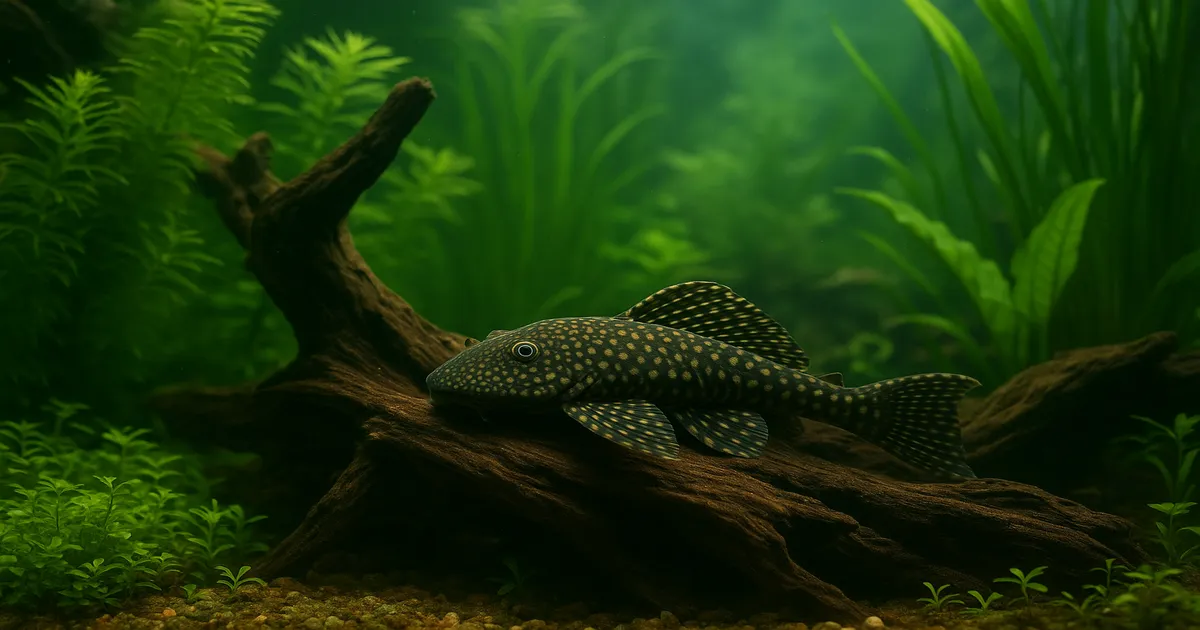
- Bottom dwellers: Bristlenose plecos, larger Corydoras species
Fish and Invertebrates to Avoid
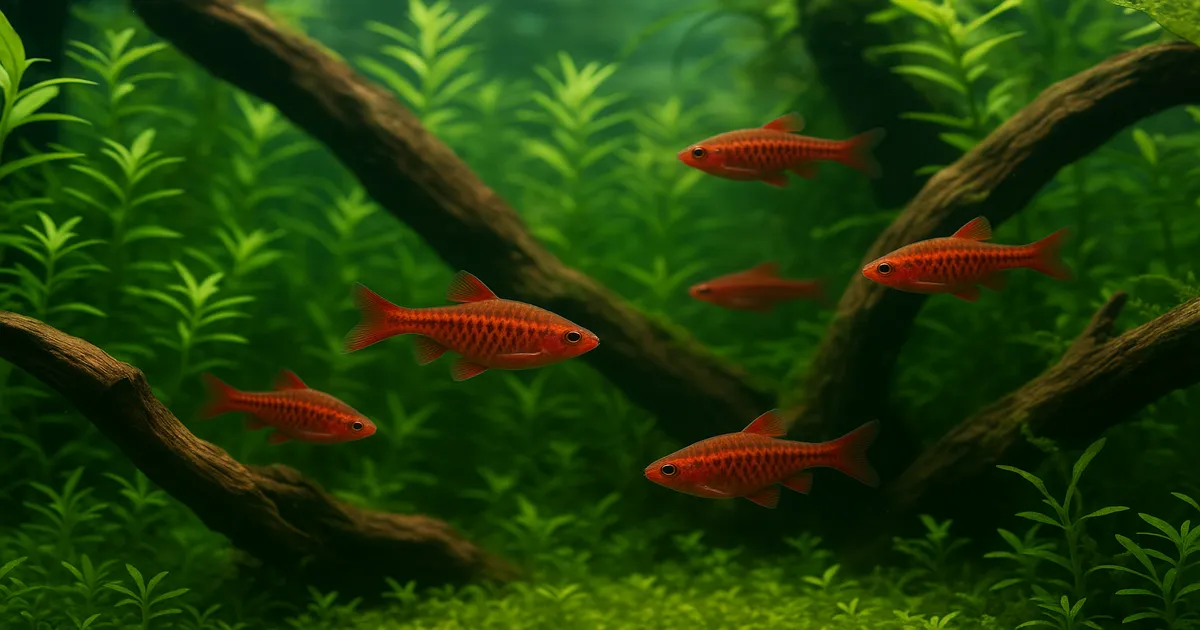
- Nano fish (neon tetras, ember tetras, small rasboras) — increasingly at risk as clown loaches grow
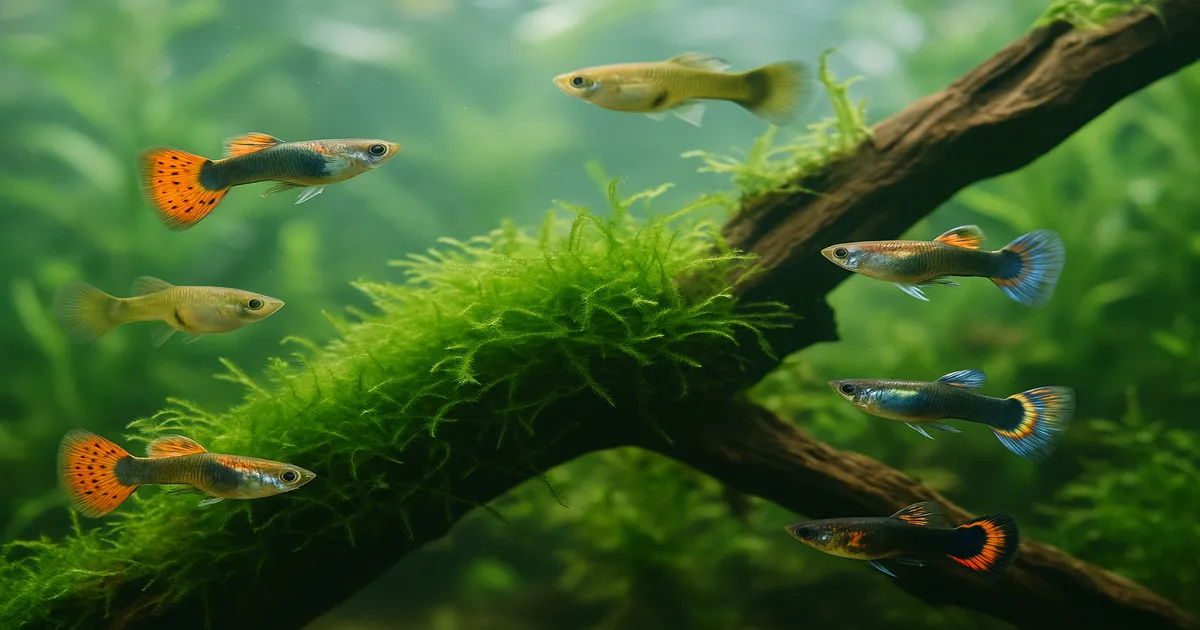
- Long-finned or slow fish (fancy guppies, bettas) — prone to fin nipping
- Aggressive cichlids (Oscars, Jack Dempseys, flowerhorns) — will bully or injure loaches
- Goldfish — incompatible temperature requirements
- Snails and small shrimp — cherry shrimp, Amano shrimp, nerites, and mystery snails are all on the menu
Clown loaches are genuinely effective biological control for pest snail outbreaks — bladder snails and Malaysian trumpet snails don’t stand a chance. Just make sure supplemental food is available once the snail population is depleted.
Feeding Clown Loaches
What to Feed and How Often
In their native rivers, clown loaches are opportunistic benthic omnivores. Snails and mollusks are a primary food source, supplemented by worms, insect larvae, small crustaceans, plant matter, and biofilm. Replicate this variety in captivity and you’ll have healthy, vibrantly colored fish.
Floating foods are largely ignored — everything should sink. Good staple options include:
- High-quality sinking pellets — look for formulas with 40–50% protein for juveniles
- Sinking algae wafers — provide essential plant-based nutrition
- Spirulina-based wafers — support vibrant orange coloration through carotenoid content
Several times a week, supplement with frozen foods: bloodworms, brine shrimp, daphnia, blackworms, or mysis shrimp. Rotate through them rather than defaulting to one type — variety matters for long-term health. Blanched vegetables like zucchini, cucumber, and shelled peas round out the diet with fiber and plant matter.
Feeding Schedule
- Adults: Once or twice daily; offer only what’s consumed within 3–5 minutes
- Juveniles (under 4 inches): 2–3 times daily to support growth
- Timing: Clown loaches are crepuscular — most active at dawn and dusk; evening feeding gets the best response
- Clean up: Remove uneaten food promptly; decomposing food in a large tank degrades water quality fast
Common Health Issues in Clown Loaches
Ich: Why Clown Loaches Are So Vulnerable
Clown loaches are notoriously susceptible to ich (Ichthyophthirius multifiliis). Their reduced scale covering gives the parasite easier access, and any temperature drop below 75°F (24°C) significantly suppresses their immune response. If you see white spots, act quickly.
The first-line treatment is heat: gradually raise the temperature to 86°F (30°C) over 24–48 hours while increasing surface aeration to compensate for reduced dissolved oxygen. Maintain this for at least 10–14 days. This is often effective without medication and avoids the risks that come with chemical treatment.
Important: Standard ich medications containing copper or formalin can be lethal to clown loaches at normal doses. If medication is necessary, use half the recommended dose and monitor closely. Always verify a medication’s compatibility with scaleless fish before adding it to the tank.
Other Common Issues
Skinny disease — fish that eat well but steadily lose weight likely have internal parasites. Treatment requires an antiparasitic medication appropriate for scaleless fish. Bacterial infections typically present as fin erosion, ulcers, or lethargy and are usually secondary to poor water quality or chronic stress.
The honest truth is that most health problems in clown loaches trace back to three causes: poor water quality, keeping them alone or in too-small groups, or an inadequate tank size. Fix those, and you’ve addressed the majority of disease risk.
Quarantine Protocol
Quarantine every new fish for 4–6 weeks in a dedicated tank before introducing them to your display. A bare-bottom 20–30 gallon tank with a cycled sponge filter is all you need. This step is especially important for clown loaches given how vulnerable they are to disease and how costly large tanks are to treat.
Frequently Asked Questions About Clown Loach Care
How big do clown loaches get in an aquarium?
In aquaria, clown loaches typically reach 6–12 inches (15–30 cm), though this varies based on tank size and care quality. Wild specimens can hit 12–16 inches (30–40 cm). Most fish sold in stores are 1–2 inch juveniles, so plan your tank around their adult size from day one.
How many clown loaches should be kept together?
A minimum of 5–6, with 8–12 being ideal in a large enough tank. Clown loaches form complex group hierarchies — keeping fewer than five causes chronic stress, faded coloration, and a shortened lifespan. More is genuinely better with this species.
Why is my clown loach lying on its side?
Almost certainly normal behavior. Clown loaches routinely rest on their sides, wedged into caves, or tucked at odd angles — it’s one of their most distinctive quirks and one of the most alarming to new owners. If the fish is eating well and swimming normally when active, there’s nothing to worry about.
Can clown loaches live with cichlids?
It depends on the cichlid. Peaceful species like Bolivian rams or angelfish can work in a large, well-structured tank. Aggressive species — Oscars, Jack Dempseys, flowerhorns — are incompatible and will harass or injure clown loaches. Always research the specific cichlid’s temperament and adult size before mixing.
How long do clown loaches live in captivity?
With proper care, 20–25 years is a realistic expectation, and some individuals have reportedly lived beyond 30. This exceptional lifespan is one of the most important things to understand before buying them — these are long-term companions, not starter fish.